
About 2 mi / 8 min from New Bedford, across the Acushnet River bridge. New Bedford Drywall & Plaster books Fairhaven estimates the same week, with faster turnaround for active leaks or ceiling failures given the short drive across the bridge from New Bedford.
Drywall and Plaster Repair in Fairhaven, MA
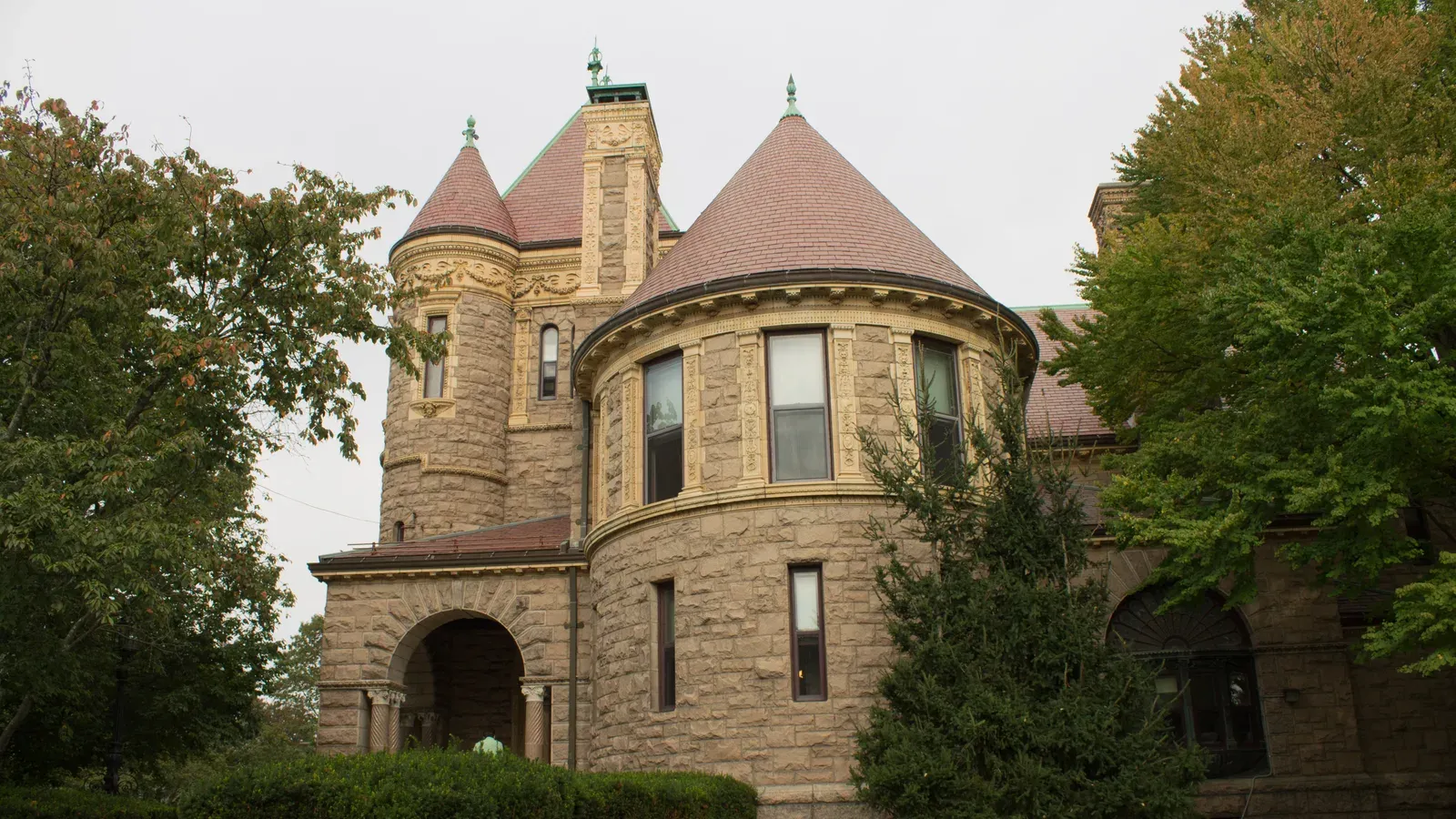
Fairhaven’s housing stock still carries the fingerprints of the H.H. Rogers building boom that reshaped the town at the turn of the last century. The Standard Oil financier funded Millicent Library, Fairhaven Town Hall, and the Unitarian Memorial Church, and the residential streets that filled in around those landmarks are lined with Victorians and Colonial Revival homes from the same era. Inside nearly all of them, the walls and ceilings started life as lath and plaster, not drywall.
What Fairhaven’s Plaster Actually Needs
Original lath and plaster ages in predictable ways. Keys break loose from the wood lath behind the wall, ceilings sag or crack along the joist lines, and coats separate near windows and door frames where the house has settled over a century. New Bedford Drywall & Plaster treats most of this as a skim-coat repair problem: reattach or consolidate the loose plaster, then skim over the lath to restore a flat, paintable surface that matches the surrounding texture. Full tear-out and drywall replacement is rarely the right call in a house this old, since it changes the wall’s sound and feel and creates a visible seam where old plaster meets new board.
Homes closer to the historic core, especially near the library, town hall, and the church, tend to have higher ceilings and more elaborate cornice and molding work than the outlying streets. Repairs there call for a historic-sensitive approach that keeps those profiles intact rather than flattening everything to a modern finish.
Waterfront Exposure Near Fort Phoenix and the River
Fairhaven’s western edge sits right on the Acushnet River, with Fort Phoenix marking the point where the river opens into New Bedford Harbor and Buzzards Bay. Homes along that waterfront and the streets nearest the bridge into New Bedford see more salt air and, during nor’easters and coastal storms, occasional flood exposure. That combination shows up inside as water-stained ceilings and soft, mold-affected drywall or plaster behind exterior walls, which is why mold-resistant board and proper drying before any patch work matters more here than it does further inland.
Lead-Safe Work Is the Norm, Not the Exception
Because so much of Fairhaven predates 1978, EPA RRP lead-safe practices apply to the great majority of plaster and trim repairs in town. Containment, careful surface prep, and proper cleanup aren’t an upsell here, they’re standard procedure on almost every job that touches an original painted wall or ceiling.
A Walkable, Well-Kept Town
Fairhaven’s historic district reads as a coherent, walkable neighborhood rather than a scattering of old houses, and homeowners here tend to care about keeping that character intact. That means plaster repairs that match the original texture and profile carry real value, both for resale and for simply living in a house that still looks like the one Rogers-era Fairhaven built.
Neighborhoods we work in
- Historic town center (Millicent Library and Town Hall) — H.H. Rogers-funded civic buildings surrounded by dense, well-kept Victorian and Colonial Revival housing, much of it original plaster.
- Unitarian Memorial Church area — Landmark Rogers-era architecture anchoring a walkable historic residential district.
- Fort Phoenix / waterfront — Older coastal homes near the harbor mouth, exposed to salt air and flood risk.
- Acushnet River waterfront and bridge corridor — The river-facing streets closest to New Bedford, mixing older multi-family housing with harbor views.
Why Fairhaven homes need what they need
Dense pre-1940 Victorian and Colonial Revival stock from the H.H. Rogers building boom.
Original lath and plaster walls and ceilings crack and separate with age and need skim-coat repair, not full replacement.
Historic district around Millicent Library, Town Hall, and the Unitarian Memorial Church.
Homeowners in and near the historic core want repairs that preserve plaster texture and profiles rather than a drywall patch that reads differently.
Fort Phoenix and Acushnet River waterfront exposure.
Salt air and occasional flood events drive water damage and mold behind walls in harbor-adjacent homes.
Pre-1978 housing almost townwide.
Any repair disturbing old painted plaster or trim falls under EPA lead-safe rules.
What we’re called for most in Fairhaven
Local resources for Fairhaven homeowners
- Building Department (Town of Fairhaven) — Handles permits for both new construction and repair work; confirm whether interior repair work needs a permit before framing or structural changes.
- Assessors (Town of Fairhaven) — Property records show the age of the town's Rogers-era housing stock.
- FEMA flood map (coastal) — Relevant for waterfront streets near Fort Phoenix and the Acushnet River.
- Historical Commission (Town of Fairhaven) — Reviews exterior work near the H.H. Rogers-era historic buildings and district.
Frequently asked questions
Does a historic home near the Fairhaven town center need special permission for plaster repair? +
Interior plaster repair generally does not trigger historic district review, since that review focuses on exterior changes. It is still worth a quick check with the town's historical commission if the project also touches trim or siding visible from the street.
Is my Fairhaven house likely to have lath and plaster instead of drywall? +
If it was built before 1940, which describes most of the housing near the town center and waterfront, it almost certainly started as lath and plaster, even if later additions used drywall.