
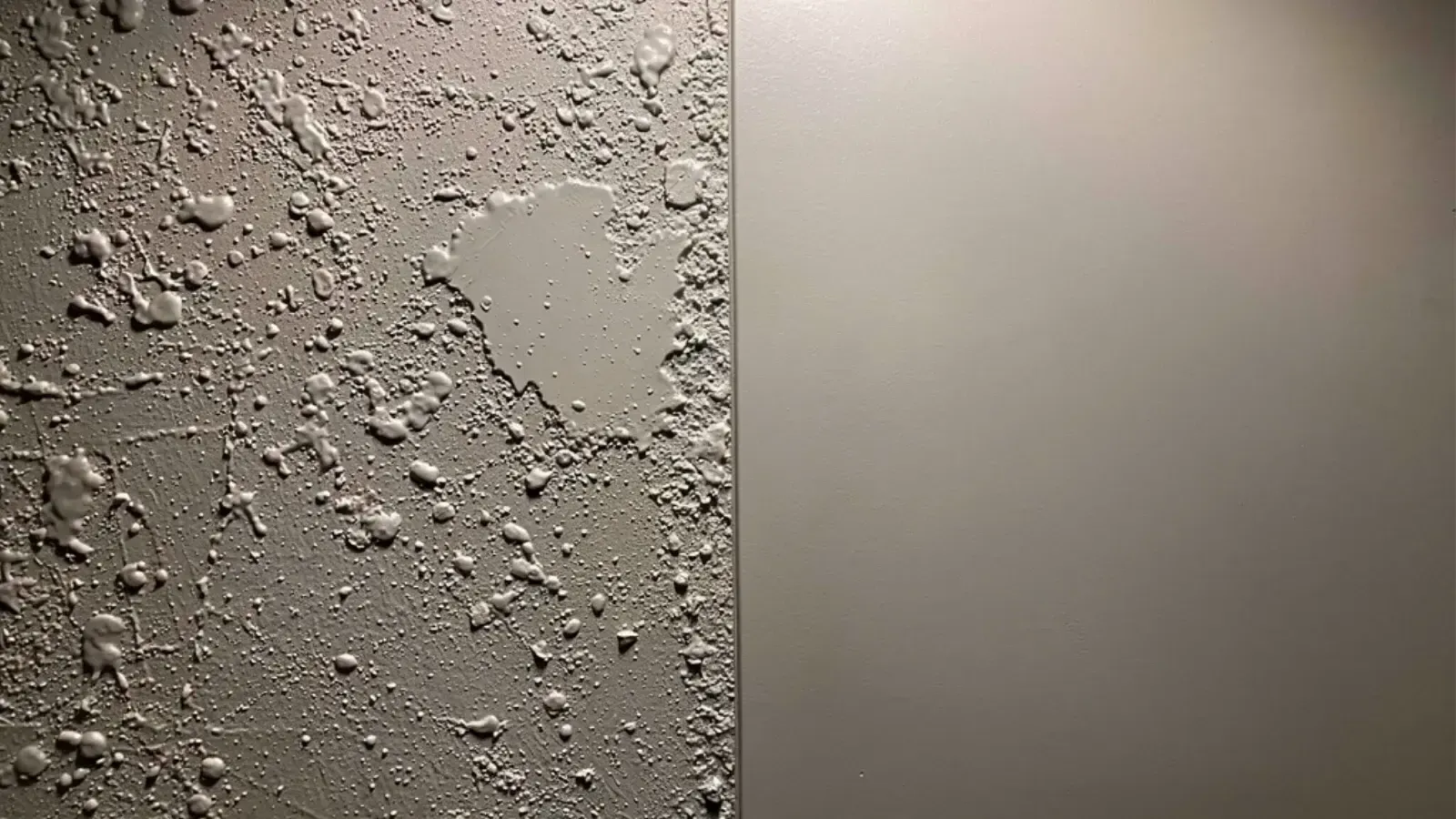
Signs you need this
- • A smooth, flat patch standing out like a picture frame against the knockdown or orange-peel texture surrounding it.
- • A previous contractor's repair that was never textured to match, visible as a dull or oddly reflective rectangle under any light.
- • Texture that shifts noticeably from room to room, especially between an original structure and a later addition.
New Bedford Drywall & Plaster blends a repaired section of wall or ceiling into the texture already surrounding it, so the patch disappears into the field instead of standing out as a flat island. The work starts with identifying the existing pattern, whether it’s a hand-knockdown, an orange peel, or another hand-applied texture, then matching the compound consistency and application tool to recreate it, and feathering the new texture into the old so the transition line isn’t visible once painted. It’s the opposite goal of a skim-coat job: instead of flattening a surface, the aim here is to make the repaired spot indistinguishable from what’s already there.
This service is for owners of postwar ranch and split-level homes along Rockdale Avenue and Ashley Boulevard where knockdown or orange-peel texture was applied and a later repair left a smooth, unmatched patch. It is for homeowners who had plumbing, electrical, or HVAC work cut into a textured wall or ceiling and were left with a flat patch once the trade moved on, and for sellers preparing a listing who need patch work blended in so buyers and inspectors don’t flag it as an obvious repair. It also fits owners of multi-era homes where an addition or a renovated room carries a different texture than the rest of the house and want the transition smoothed between them.
Materials & standards
Products & materials we use
- USG Sheetrock joint compound
- National Gypsum Gold Bond
Standards & codes we work to
- ASTM C1396
- Massachusetts State Building Code (780 CMR)
What the terms mean
- knockdown texture
- orange peel texture
- feather/blend
- skip-trowel
- hand-applied texture
- texture matching
Options & variants
| Option | When it applies | Cost |
|---|---|---|
| Knockdown match | Wall or ceiling with a stippled-then-flattened knockdown pattern | Moderate; splatter application knocked down to match the surrounding texture |
| Orange peel match | Fine, stippled orange-peel texture common on smoother mid-century walls | Moderate; finer application, less aggressive knockdown |
| Hand-troweled or skip-trowel match | Older, coarser hand-applied texture | Higher; more hand-tool work to replicate an irregular pattern |
| Multi-room texture blending | Addition or renovated room with texture that differs from the rest of the house | Higher; may mean re-texturing a larger transition zone, not just a single patch |
What affects cost
- • How closely the existing texture pattern has to be replicated, since a fine orange peel takes different technique and time than a coarse hand-troweled finish.
- • Size of the patch and how large a surrounding area needs feathering so the transition doesn't show.
- • Whether the original texture was sprayed on or hand-applied, since hand-applied patterns take longer to match by hand.
- • Ceiling versus wall work, since ceiling texture matching is done overhead and takes more staging.
- • Whether a test patch is needed first to dial in the right compound mix and knockdown timing before touching the visible repair.
What to expect
- 1
Identify the pattern
New Bedford Drywall & Plaster examines the existing texture up close to identify the pattern and the tool likely used to create it originally.
- 2
Dial in a test patch
A test patch is applied in an inconspicuous spot or on a sample board to dial in compound consistency and knockdown timing before touching the visible repair.
- 3
Prep the patch flat
The drywall patch itself is taped, coated, and sanded flat as a base, the same way any smooth repair would be prepped.
- 4
Apply and feather the texture
The matched texture is applied over the patch and feathered out into the surrounding field rather than stopping at a hard edge.
- 5
Check under angled light
Once dry, the texture is checked under angled light against the surrounding wall or ceiling for pattern and sheen match.
- 6
Prime and walk through
The area is primed, and the owner walks the repair to confirm the patch is no longer visible.
When this isn’t the right call
- If the owner actually wants the whole wall or ceiling flattened, whether to change the look entirely or prep for gloss paint, that's a skim coat to a Level 5 finish, not texture matching.
- If the texture in question is sprayed popcorn on a ceiling, that's handled as popcorn ceiling removal, including asbestos-age testing on houses that predate 1980, not a texture-blend patch.
- If the underlying damage is still active, a fresh leak or an unresolved crack, that needs its root repair addressed first. Texturing over an unstable patch just means redoing it later.
Frequently asked questions
Can you really make a patch invisible? +
With a test patch and careful matching, the repair reads as invisible under normal light. Very close raking light can sometimes still catch the seam, which is why the test-patch step matters.
What if I don't know what kind of texture is on my wall? +
New Bedford Drywall & Plaster identifies the pattern on site, whether it's a knockdown, an orange peel, or an older hand-troweled finish, before matching begins.
Do you match ceiling texture too, or just walls? +
Both. Ceiling texture matching follows the same process, just staged overhead.
My house has different textures in different rooms. Can you fix that? +
Yes, that's multi-room texture blending, reconciling an addition or a renovated room against the texture in the rest of the house.
How long does texture matching take once the underlying patch itself is done? +
It depends on drying time between coats and how much area needs feathering, but it's typically handled as the finishing step right after the patch repair.
Will the paint need to be touched up too? +
Yes. A matched texture still needs the surrounding paint sheen carried over it so the repair blends completely, not just the texture pattern.