
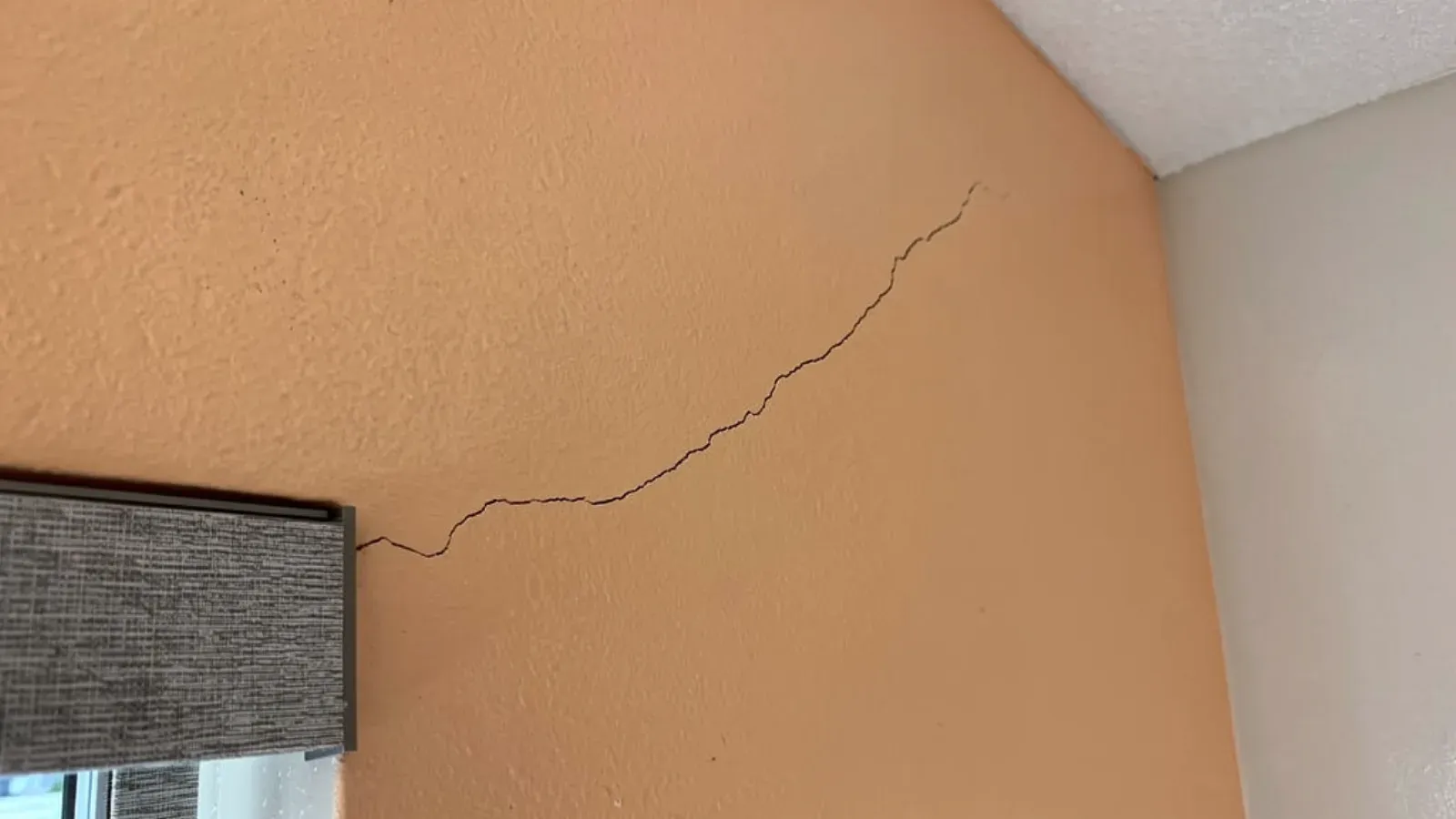
Signs you need this
- • A crack along a wall or ceiling seam that was patched and painted before and has already reopened in the exact same spot within a year.
- • A diagonal crack running from the corner of a doorway or window, which usually traces back to framing or foundation movement rather than surface damage alone.
- • A crack along an outside wall corner where the metal corner bead underneath has separated or the compound over it keeps splitting open.
New Bedford Drywall & Plaster treats a recurring crack as a diagnosis first and a repair second. Before any compound goes on, the crew figures out whether the crack traces to a joint that was never taped properly, a corner bead that has come loose, or ordinary seasonal movement in an older frame, because filling the same symptom without addressing the cause is why it keeps coming back. Once the cause is identified, the fix is built to move with the house, using flexible compound or a properly re-embedded joint rather than a rigid patch that’s guaranteed to crack again.
This service is for owners of older mill-worker cottages and duplexes along the Route 6 corridor between Kempton Street and the Fairhaven bridge, where a century of seasonal framing movement is already built into the house, and for homes near I-195 or other heavy-traffic corridors, where vibration keeps reopening a corner-bead or seam crack faster than ordinary settling would. It is for anyone who has already paid to patch and paint the same crack once, sometimes twice, and wants the underlying cause fixed instead of another cosmetic fill, and for owners of a Far North End home with an addition tied into older original framing, where the two sections settle at slightly different rates and telegraph a crack at the seam between them.
Materials & standards
Products & materials we use
- USG Sheetrock
- FibaTape
- joint compound by National Gypsum Gold Bond
Standards & codes we work to
- Massachusetts State Building Code (780 CMR)
- ASTM C1396
- GA-214 finish levels
What the terms mean
- control joint
- flexible compound
- tape embed
- corner bead
- stair-step cracking
- settling crack
- seasonal movement
- joint compound
Options & variants
| Option | When it applies | Cost |
|---|---|---|
| Failed or under-taped joint repair | Original taping was too thin or dried out and the seam has separated | Moderate; tape is cut back and re-embedded properly |
| Corner bead replacement | Metal corner bead has bent, separated, or the compound over it keeps splitting | Moderate; bead is resecured or replaced, then refinished |
| Flexible settling-crack repair | Recurring crack traced to normal seasonal movement in an older frame | Moderate; fiber mesh and flexible compound absorb movement instead of cracking again |
| Structural-adjacent crack assessment | Crack pattern suggests movement beyond what a drywall fix alone can resolve | Assessed honestly; may involve a referral before drywall work proceeds |
What affects cost
- • How much time it takes to diagnose the cause, since a single obvious corner-bead failure is quicker to confirm than a pattern of several cracks across a room.
- • Whether the fix is a re-tape, a bead replacement, or a flexible mesh repair, each of which takes a different amount of labor.
- • Whether one crack is being addressed or a pattern across multiple corners or seams in the same room.
- • The paint and texture blending needed afterward to make the repaired line disappear into the surrounding wall or ceiling.
What to expect
- 1
Inspect and ask history
New Bedford Drywall & Plaster inspects the crack pattern and asks about its history: whether it's been patched before, and whether it opens and closes with the seasons.
- 2
Identify the cause
The likely cause is identified, whether that's a failed joint, a loose corner bead, or ordinary seasonal movement in the framing.
- 3
Cut back to sound material
Loose or failed compound and tape are cut back to sound material rather than filled over.
- 4
Re-embed, resecure, or reinforce
The joint is re-embedded, the bead is resecured or replaced, or a flexible mesh and compound system is applied where movement is expected to continue.
- 5
Finish and texture-match
The repair is finished, sanded, and textured to match the surrounding wall or ceiling.
- 6
Prime and explain the cause
The area is primed and left ready for paint, with the cause explained plainly to the owner so they know what was actually fixed.
When this isn’t the right call
- If the crack is wide, stair-stepped through masonry or foundation, or paired with a door or window that has started sticking, that points to structural movement beyond what a drywall repair can resolve, and a structural engineer or mason should be brought in first.
- If the ceiling is sagging with broken plaster keys but there's no clear crack pattern, that's ceiling repair.
- If it's a single, isolated hole or ding rather than a crack that keeps returning, that's everyday drywall repair patching.
Frequently asked questions
Why does my crack keep coming back after I've had it patched before? +
Because the earlier patch likely filled the visible line without addressing what caused it, whether that's a joint that was never properly taped or ongoing seasonal movement in the framing. New Bedford Drywall & Plaster diagnoses the cause first so the repair actually holds.
Does a recurring crack mean my foundation is failing? +
Not usually. Most recurring cracks in older New Bedford housing trace to normal seasonal movement or a joint that failed, not a structural problem. A wide, stair-stepped crack paired with sticking doors is the pattern that warrants a structural look.
What does a corner bead crack look like, and why does it keep splitting? +
It runs along an outside wall corner where the metal bead underneath has come loose or bent slightly, so the compound over it keeps flexing and reopening. Resecuring or replacing the bead stops the cycle.
My crack opens more in winter and closes a bit in summer. Is that normal? +
In an older home, yes, that's typical seasonal movement as framing expands and contracts. A flexible repair is built to move with that cycle instead of cracking again each winter.
Will this repair actually hold permanently? +
A properly diagnosed and fixed cause should hold well beyond a cosmetic fill. Ongoing structural movement can still eventually reopen any repair, which is why the crew is upfront if a crack pattern looks like it needs more than a drywall fix.
How is this different from a regular drywall patch? +
A patch fixes damage. Crack repair fixes a cause, whether that's a failed joint, a loose corner bead, or seasonal movement, so the same line doesn't reappear in a few months.