
Signs you need this
- • Original lath and plaster walls in a pre-1900 County Street historic district home that need to come out before any rebuild can start.
- • Original plaster in an older mill-worker cottage, heavier and dustier to remove than modern drywall, in a home built before 1978 where lead paint is a near-certainty.
- • A general contractor mid-gut-renovation needing walls and ceilings cleared to studs across a whole unit without derailing the rest of the demo schedule.
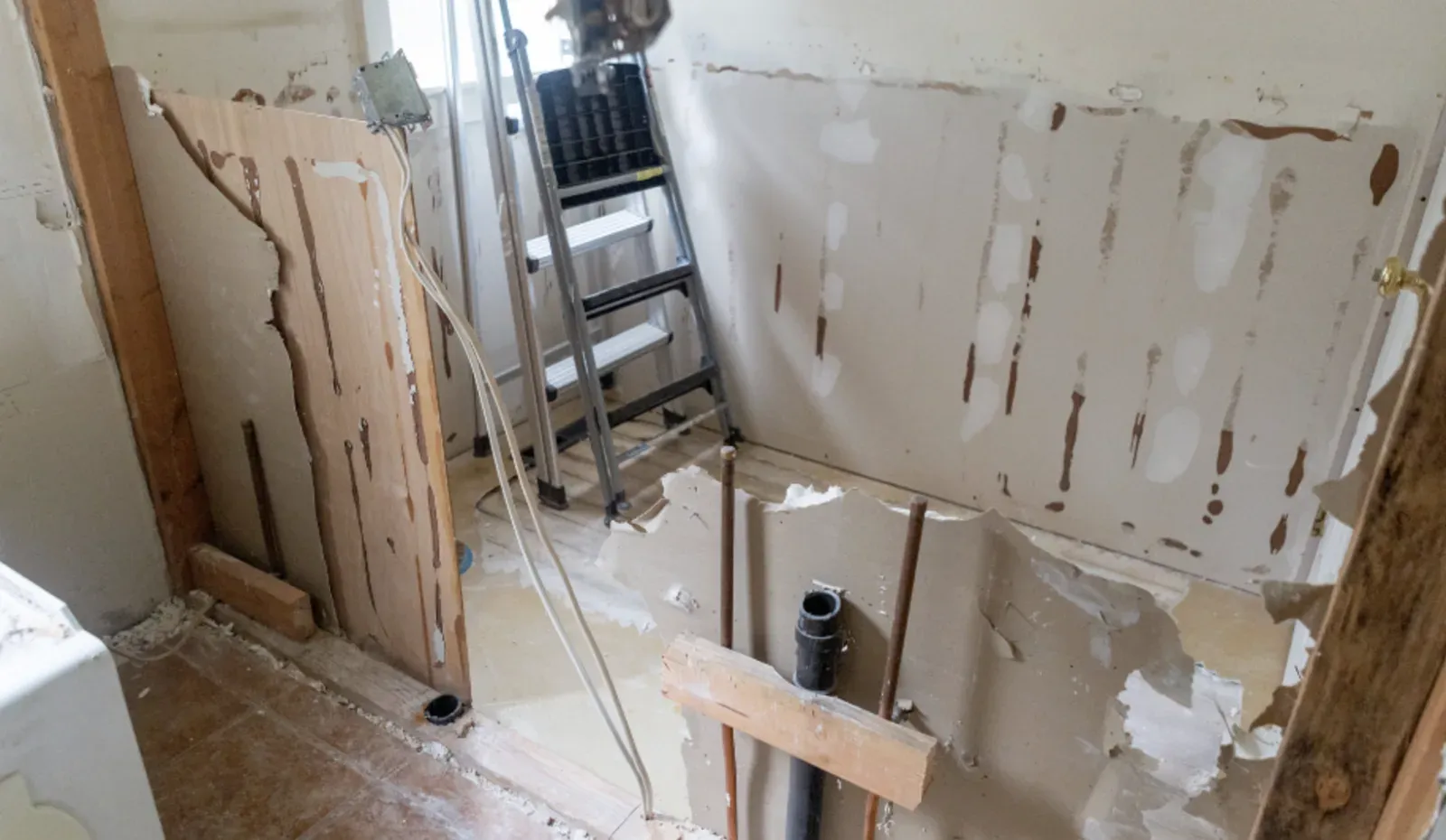
New Bedford Drywall & Plaster tears out existing drywall or plaster and lath down to the studs, contains the dust generated by the work, and hauls away the debris. Plaster removal is a heavier, dustier job than drywall removal, since it involves breaking out both the plaster coat and the wood lath strips underneath, and New Bedford’s stock of pre-1900 and pre-1940 housing means plaster is a common material to be removing, not the exception. On any property built before 1978, lead paint testing is standard practice before demolition begins, following EPA RRP lead-safe requirements.
This service is for homeowners renovating pre-1900 County Street historic district properties with original lath and plaster still in place, and for flippers and renovators working on older mill-worker cottages and rowhouses citywide with plaster walls and ceilings that predate 1940. It is also for general contractors managing a gut renovation on a triple-decker or two-family unit who need walls and ceilings cleared to studs across the whole space, and for homeowners doing a smaller room renovation who just need the existing wall or ceiling material removed before new drywall goes up.
Materials & standards
Standards & codes we work to
- EPA RRP (pre-1978 lead-safe)
- MassDEP
- MA Dept. of Labor Standards (asbestos)
What the terms mean
- lath and plaster
- tear-out
- containment
- negative airflow
- selective demolition
- debris haul-away
Options & variants
| Option | When it applies | Cost |
|---|---|---|
| Drywall-only tear-out | Modern construction or a prior drywall renovation being redone | Lower cost, faster removal than plaster |
| Plaster and lath removal | Pre-1940 New Bedford homes with original plaster walls or ceilings | Higher cost, more debris weight and dust |
| Lead-safe removal | Any property built before 1978, following EPA RRP practice | Adds testing and containment procedures |
| Selective demolition | Renovation limited to one wall, ceiling, or room rather than a full gut | Scoped to the actual area, not whole-unit pricing |
What affects cost
- • Total square footage of wall and ceiling material being removed.
- • Whether the material is drywall or plaster and lath, since plaster removal takes longer and generates more debris.
- • Whether the property was built before 1978 and requires lead-safe testing and containment.
- • Access to the work area and how debris needs to be moved out, stairs in a multi-story triple-decker versus ground-floor access.
- • Whether the space is occupied during the work, which requires more careful dust containment than a vacant property.
What to expect
- 1
Walk and confirm
The crew confirms what's being removed, drywall or plaster and lath, and the property's construction date to determine if lead testing applies.
- 2
Test for lead
Lead paint testing is performed on pre-1978 properties before any demolition begins, following EPA RRP practice.
- 3
Contain the area
The work area is contained with plastic sheeting and negative airflow where needed to keep dust from spreading into occupied parts of the property.
- 4
Break out and remove
Material is broken out and removed down to the studs, with plaster and lath handled separately from standard drywall debris given the weight and volume difference.
- 5
Haul away and hand off
Debris is hauled away and the space swept clean, ready to hand off to the next phase of the renovation, whether that's new framing, electrical, or a fresh drywall hang.
When this isn’t the right call
- If the walls just need new drywall hung on framing that's already clear, with no existing material to remove, drywall installation and hanging is the better fit.
- If only a small hole or damaged section needs patching, not a full tear-out, that's a repair scope, not demolition.
- If the removal is specifically to access and correct a fire separation issue in an attached garage, garage drywall and fire separation is the better fit once the old material is out.
- If suspected asbestos is present, such as older textured ceiling material, rather than lead paint alone, that requires MA Dept. of Labor Standards asbestos testing and abatement procedures beyond standard lead-safe demolition.
Frequently asked questions
My house was built in the 1890s. Is the plaster removal different from drywall removal? +
Yes, plaster removal involves breaking out both the plaster coat and the wood lath strips underneath, which is heavier, dustier, and slower than pulling drywall panels. It's a routine part of the work on New Bedford's older housing stock, including County Street historic district properties, but it's scoped and priced differently than drywall tear-out.
Do you test for lead paint before removing old walls? +
Yes, any property built before 1978 gets lead paint testing before demolition, following EPA RRP lead-safe practice, given how much of New Bedford's housing predates that date.
What about asbestos in old plaster or textured ceilings? +
Suspected asbestos, often found in older textured ceiling material, requires separate testing and abatement procedures under MA Dept. of Labor Standards rules, distinct from standard lead-safe demolition. This gets flagged during the walkthrough if the material looks like a candidate.
Will the dust from demolition spread through the rest of my house? +
The work area is contained with plastic sheeting and, where needed, negative airflow to keep dust from migrating into occupied parts of the property during the tear-out.
Can you remove drywall or plaster from just one room while I'm still living in the rest of the house? +
Yes, selective demolition limited to one room or wall is common, and containment is set up specifically to protect the rest of an occupied home during the work.
Do you haul away the debris, or do I need to arrange a dumpster? +
Debris removal and haul-away is included as part of the service.
How long does a full-unit gut demolition take? +
It depends on square footage and whether the material is drywall or plaster and lath, with plaster taking longer given its weight and the added lath removal step; most single-unit gut demolitions run a few days.